Intent
Connect keywords, questions, objections and maturity level to answer the right need.

Insights
Structure content that can be found, understood and cited by search engines, AI interfaces and qualified prospects.
Good SEO is not only about being seen. It makes expertise easier to understand, cite and choose.
Effective SEO connects architecture, search intent, editorial quality, structured data, web performance and internal linking to make expertise easier to find, understand and cite.
This page helps frame the SEO/GEO choices that make expertise findable, readable by search engines, usable by AI interfaces and convincing for decision-stage users.
Connect keywords, questions, objections and maturity level to answer the right need.
Organize pages, headings, internal links, structured data and technical signals to make meaning easier to parse.
Create precise, useful and verifiable content that can be selected in enriched results and AI answers.
SEO decisions
SEO is not a layer added at the end. It depends on how the offer is expressed, which pages are created, how precise the content is and whether the website can make that content fast, indexable and trustworthy.
Segment content by informational, comparative and transactional intent to attract more qualified demand.
Structure pillar pages, articles, internal links and structured data so each theme is readable.
Strengthen proof, examples, sources, authorship and internal links to give search engines and AI systems reliable signals.
Reading path
SEO analyses start from a simple question: why does a page that already exists fail to be found, understood, chosen or reused in an answer?
Start by identifying the blockers: unclear intent, competition, weak structure, incomplete content or technical friction.
Diagnose SEO blockersWork on answers, proof, examples and editorial precision to become more citable.
Structure content for AISpeed, markup, indexing, canonicals, structured data and internal linking shape visibility.
Fix technical blockersStructure pages so answers are easier to extract, verify and connect to your expertise.
Prepare pages for GEOArticles to read
Analyses to structure content, strengthen SEO/GEO architecture and make expertise easier to understand, cite and choose.
 SEO Advanced
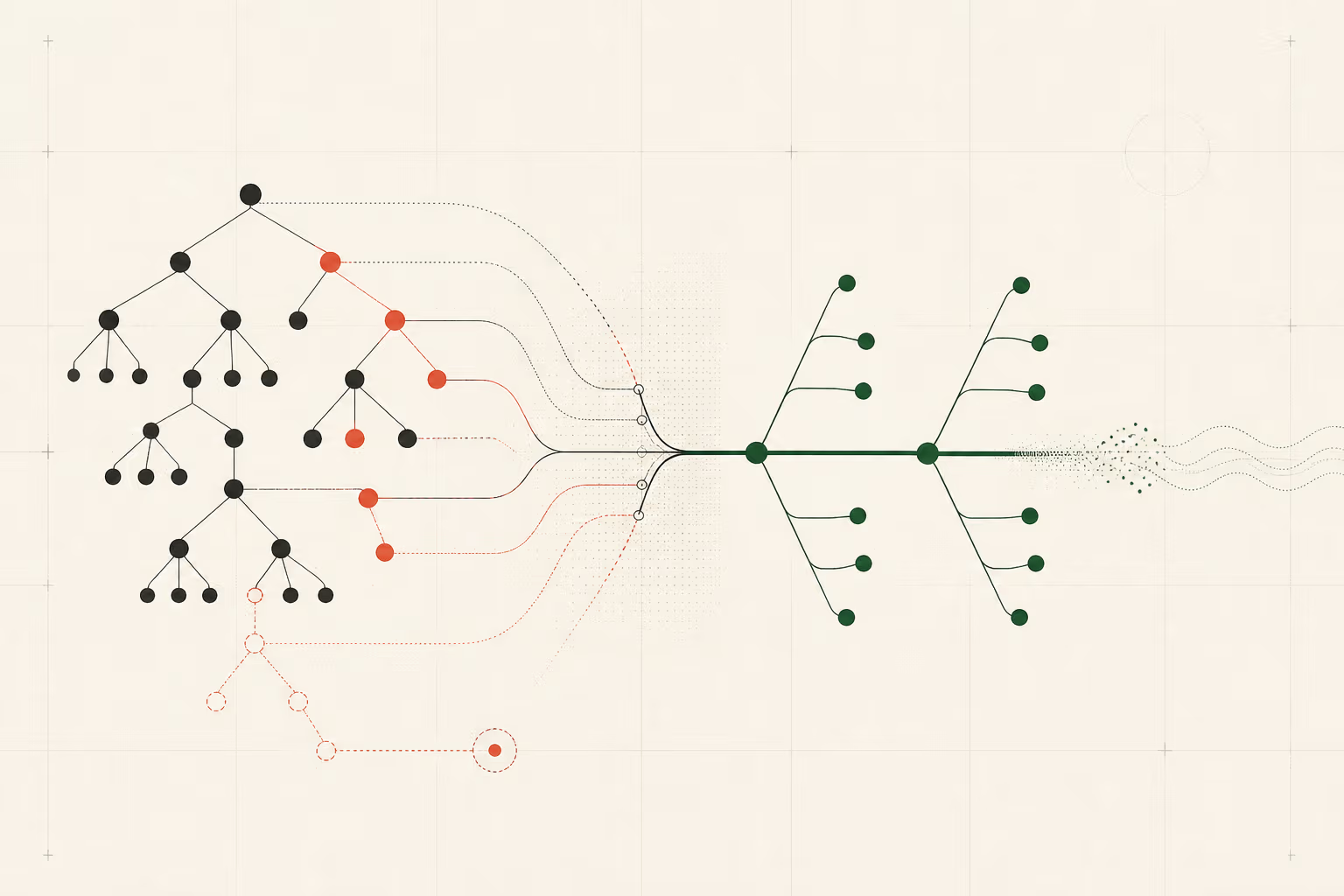
 A permanent redirect helps systems find a moved resource; it guarantees neither rankings, indexing ...
 SEO Advanced
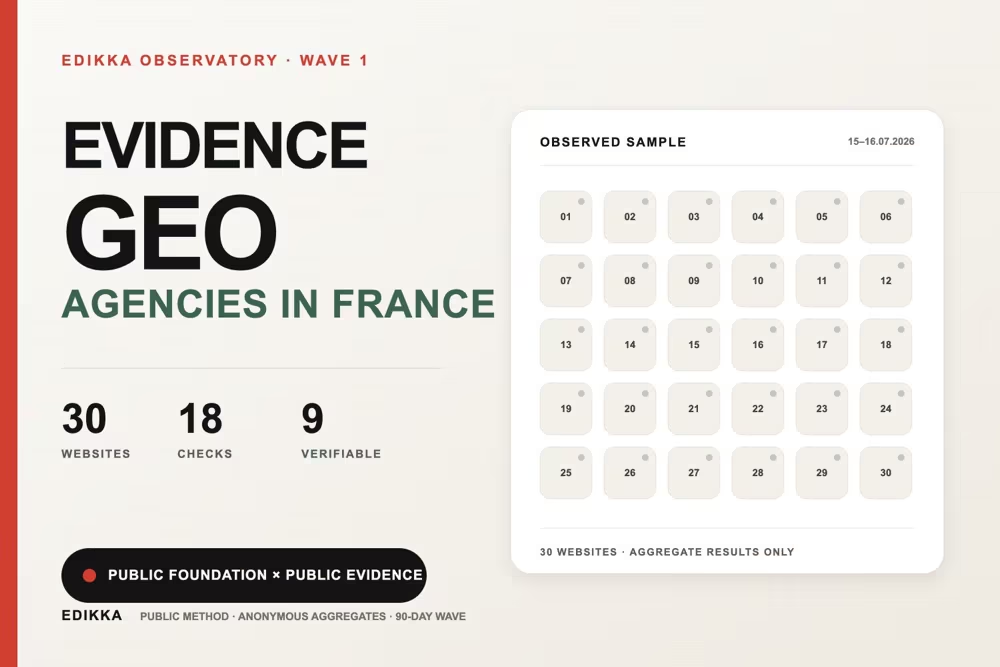
 9 out of 30 websites publish GEO evidence that a third party can verify; no individual result is ...
 SEO Advanced
 GPTBot, Google-Extended, ClaudeBot, Applebot-Extended, Perplexity: a decision method for blocking, ...
 SEO Advanced
 After GEO citability, the next challenge is actionability: helping AI agents understand, verify, ...
 SEO Understand
 The Edikka GEO Readiness Index uses public, verifiable signals to assess whether a website can be ...
 SEO Understand
 Define GEO, understand how it differs from SEO and identify the useful actions that make a website ...
 SEO Understand
 Track citations, sources, mentions, Google AI impressions and cited competitors without confusing ...
 SEO Understand
 Using Schema.org, structured data and coherent architecture to make a website more readable for ...
 SEO Understand
 Understanding the evolution of Google towards AI search and preparing a website to be understood, ...
 SEO Understand
 Structuring content, internal linking and satellite pages to build lasting SEO authority for a ...
 SEO Understand
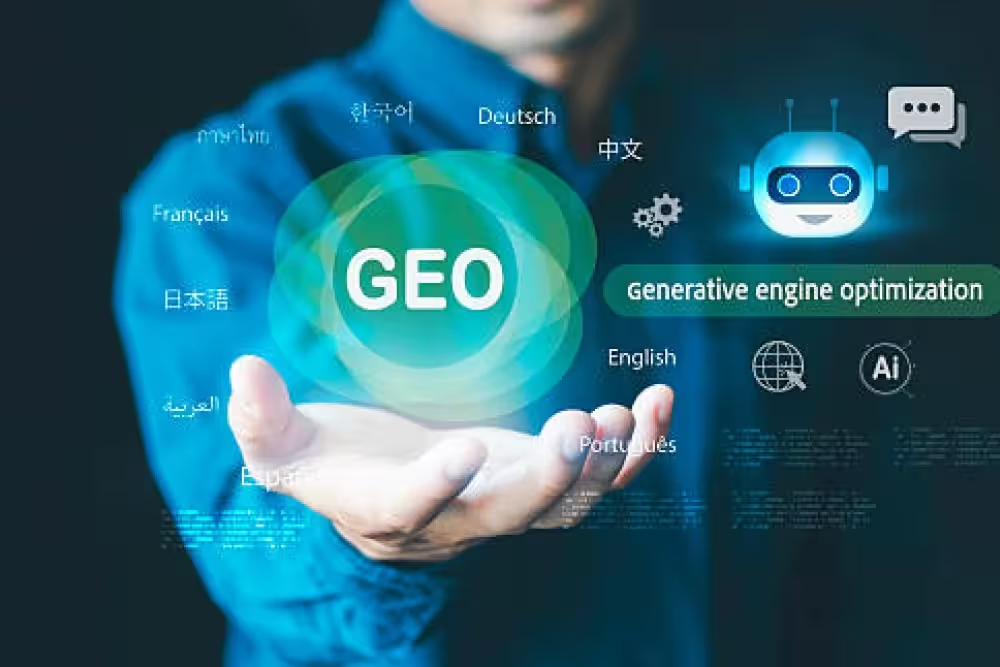
 Hierarchy, silos, internal linking and semantic structure: building an architecture designed for ...
 SEO Optimize
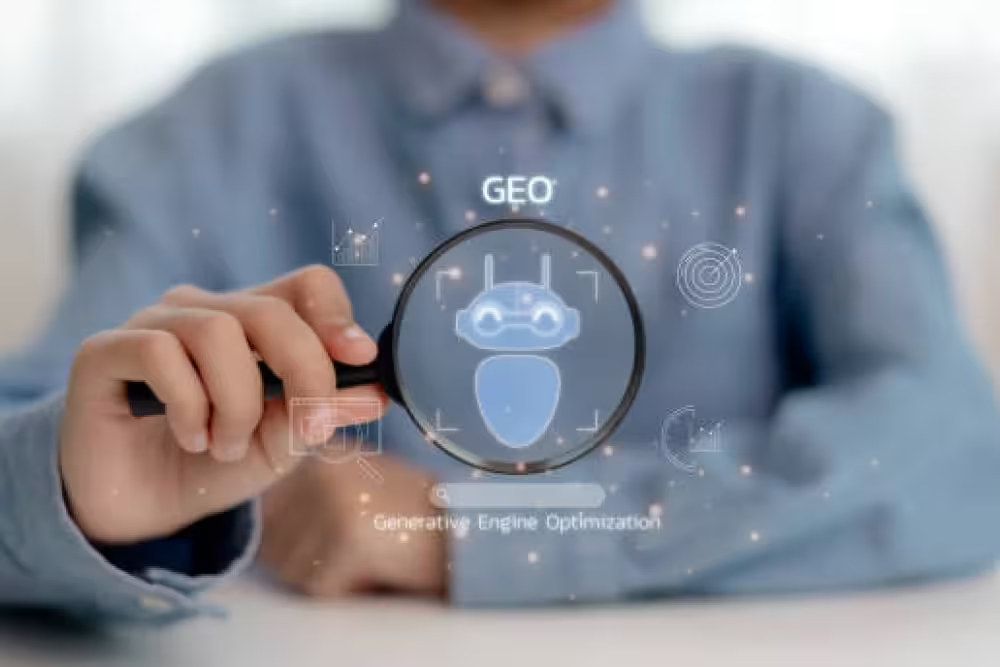
 A GEO method for turning a page into a clear, extractable, verifiable source that can be cited by ...
 SEO Optimize
 Detect the SEO mistakes that block indexation, dilute authority, weaken content and make a site ...
 SEO Understand
 Analyze, structure and optimize your website to improve visibility
 SEO Understand
 Understand, structure and master modern SEO
From visibility to authority
Edikka SEO and AI visibility expertise turns content into a readable system: search intent, architecture, internal linking, performance, structured data, GEO and editorial proof.
Strategy. Design. Code. SEO. AI. Clearer, faster, and more compelling digital experiences.