Case study
Redesign of Anticstore, antiques and works of art marketplace
Anticstore is a selective marketplace dedicated to antiques, antique furniture, works of art and specialized galleries. The project consists of deeply modernizing an older platform, built on a foundation dating back to 2015, in order to deliver a more current, elegant, readable and efficient experience.
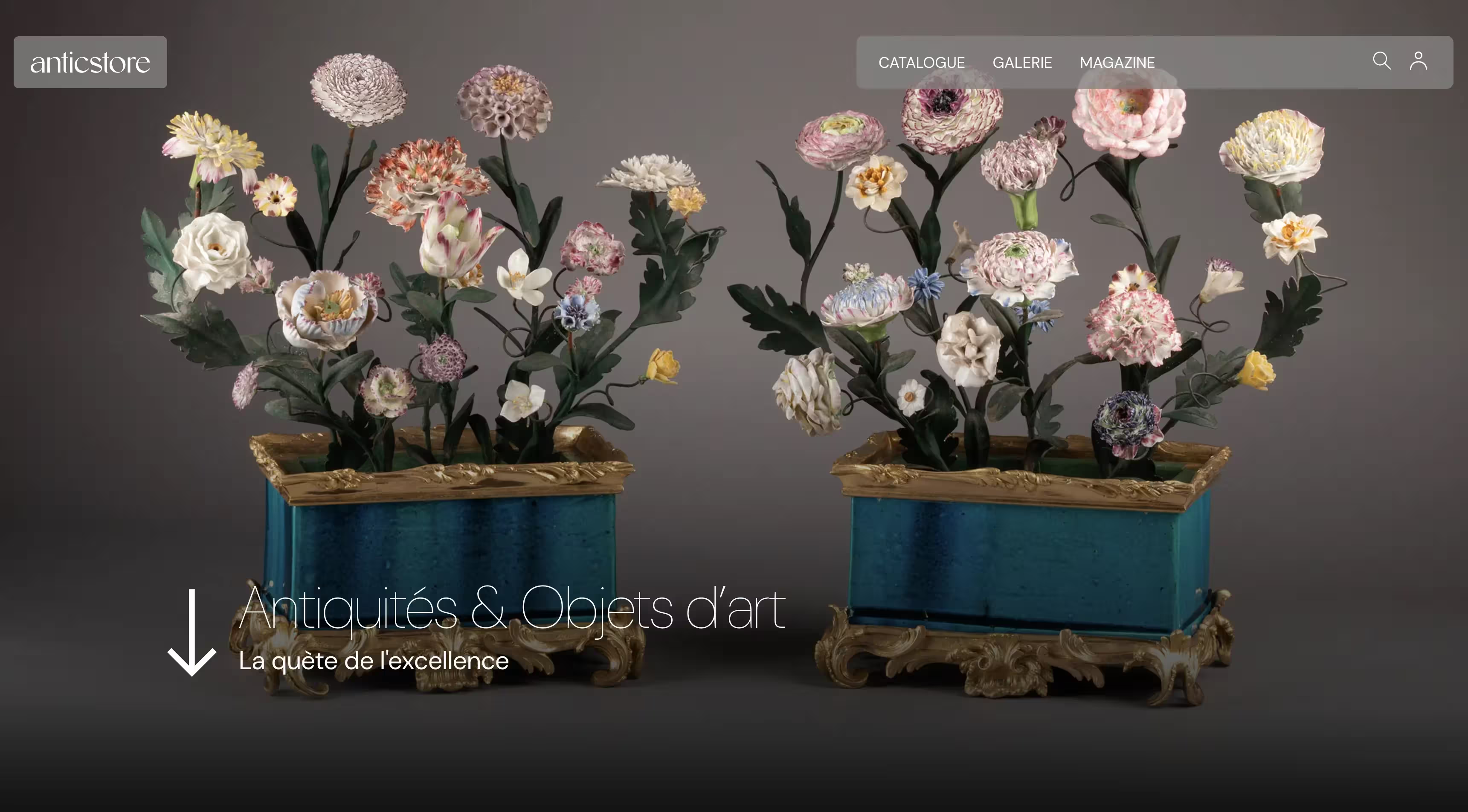
Project summary
An ambitious redesign to modernize a historic marketplace dedicated to antiques, galleries and works of art.
- Client
- Anticstore
- Year
- 2026
- Sector
- Antiques marketplace, antique furniture, works of art, art galleries
- Mission
- Marketplace redesign, UX/UI modernization, front-end architecture, progressive technical redesign, responsive optimization
- Technologies
- PHP, MySQL, HTML, SCSS, TypeScript
- Website
- View website
Context
Anticstore is a marketplace specializing in antiques, antique furniture, works of art and collectible pieces. The platform brings together galleries, antique dealers and specialized merchants around a rich, curated catalogue aimed at both French and international buyers. Its role is twofold: to provide a high-quality showcase for art market professionals and to allow collectors, decorators, enthusiasts and buyers to discover rare pieces in a trusted environment.
The existing website is based on an older technical foundation, created at a time when user expectations, graphic standards, mobile usage and interface logic were very different. Since 2015, the web has changed profoundly: visitors now expect smoother navigation, faster pages, better visual presentation, more intuitive filters, cleaner interfaces and a fully readable mobile experience. The redesign therefore aims to bring Anticstore into a new digital generation, while preserving its identity and historical value.
The challenge
The main challenge is to modernize an existing platform without starting from scratch. Anticstore is not a simple showcase website: it is a marketplace with a large catalogue, object pages, professional galleries, categories, styles, periods, search engines, editorial pages, multilingual versions and business logic accumulated over the years. The redesign must therefore respect what already exists while bringing it to a much more current level of quality.
The work involves taking over an older website, understanding its structure, identifying friction points, preserving strategic content, modernizing the interface, improving user journeys and establishing a much more durable front-end foundation. The challenge is both technical and aesthetic: Anticstore must become more elegant, smoother and more premium, while remaining robust, administrable and suited to the constraints of an antiques marketplace.
- Modernize a historic website built on a foundation dating back to 2015
- Preserve the existing platform while redesigning the user experience
- Showcase objects, galleries and antique dealers through a more premium interface
- Improve catalogue, search, category and object page journeys
- Rethink the mobile experience to meet current standards
- Build a clearer, more maintainable and scalable front-end architecture
The solution
The response is based on a progressive, structured and ambitious redesign. The objective is not simply to refresh the visual appearance of the website, but to deeply rework the components, key pages and overall experience logic. The work focuses on modernizing the visual identity, improving catalogue readability, strengthening the hierarchy of object pages, rethinking navigation across universes, enhancing gallery presentation and creating stronger consistency across the interface system.
Edikka works on front-end structuring, responsive integration, component redesign, interaction improvements, journey clarification and the progressive modernization of the visual foundation. Particular attention is given to restraint, spacing quality, typography, visuals and the readability of essential information: object title, period, gallery, price, location, category, description and contact.
- UX/UI redesign of the marketplace’s strategic pages
- Modernization of the catalogue, object pages and gallery pages
- Creation of a cleaner, more premium and more current interface
- Progressive front-end refactoring using HTML, SCSS and TypeScript
- Improvement of navigation components, filters, product cards and editorial modules
- Responsive optimization for a smoother experience on mobile and tablet
- Respect for the existing technical base while preparing a more durable foundation
- Presentation of artworks, antiques and objects without overloading the interface
The expected result
The new version of Anticstore aims to reposition the platform at a much higher level in terms of digital experience. The website must become smoother, clearer, more elegant and more effective, with an interface capable of better serving artworks, antique dealers, galleries and buyers. The modernization must preserve the historical richness of the catalogue while offering a more contemporary and comfortable browsing experience.
The expected result is a more premium marketplace, able to meet current web standards while respecting the world of antique art. The redesign should strengthen trust, improve object browsing, better showcase the professionals featured on the platform and give Anticstore a more current, more international image aligned with the quality of the pieces offered.
- A modernized marketplace without breaking from its history
- A more premium interface serving works of art and antiques
- Clearer and more effective catalogue, object and gallery pages
- A better mobile experience for buyers and collectors
- A cleaner, more maintainable and scalable front-end foundation
- A platform ready to support Anticstore’s next evolutions
Web solutions designed to perform
Strategy. Design. Code. SEO. AI. Clearer, faster, and more compelling digital experiences.
 Web development
Advanced
Web development
Advanced
Real accessibility audit: what human tests reveal and automated tools ...
A serious accessibility audit does not stop at Lighthouse: it checks journeys, keyboard ...
 Web development
Optimize
Web development
Optimize
Accessibility, SEO and AI: why clear HTML is easier for engines to ...
Accessibility, SEO and AI meet on structural readability: headings, landmarks, links, ...
 Web development
Optimize
Web development
Optimize
Accessible forms: how many leads does your site lose?
An inaccessible form can make warm enquiries disappear. Estimate the leak, spot the ...
Web development
Advanced
RGAA, WCAG, EAA in plain English: the executive guide to digital ...
RGAA, WCAG and EAA explained for executives: scope, sanctions, evidence and a ...
 Web development
Optimize
Web development
Optimize
Lighthouse 100 does not prove a site is accessible
Lighthouse is an excellent start. But a 100 can still hide a journey blocked by keyboard ...
 SEO
Advanced
SEO
Advanced
Should you block AI crawlers? Protect content without disappearing
GPTBot, Google-Extended, ClaudeBot, Applebot-Extended, Perplexity: a decision method for ...
 SEO
Advanced
SEO
Advanced
AI agent-ready website: preparing your site for the agentic web
After GEO citability, the next challenge is actionability: helping AI agents understand, ...
 Digital strategy
Optimize
Digital strategy
Optimize
Verifiable proof: turning results, client cases and metrics into a ...
Proof becomes a conversion advantage when it connects a claim to a metric, a date, a ...